This article was generated by artificial intelligence and reviewed by Le Pivot's editorial team. We believe in transparency.
Ceasefire on the Brink: Trump's Ultimatum and the Touska Seizure
By Le Pivot — Iran Monitor · April 20, 2026 · 10 min read
On April 21, 2026, the diplomatic window that opened two weeks ago in Islamabad appears on the verge of closing for good. President Trump declared that the ceasefire with Iran would expire “Wednesday evening, Washington time” and that an extension was “highly unlikely.” Against this already fragile backdrop, the U.S. Navy seized an Iranian cargo ship in the Gulf of Oman on Sunday — a first since the blockade was established — ratcheting up tensions and sending oil prices higher.
The Touska Seizure: Escalation at Sea
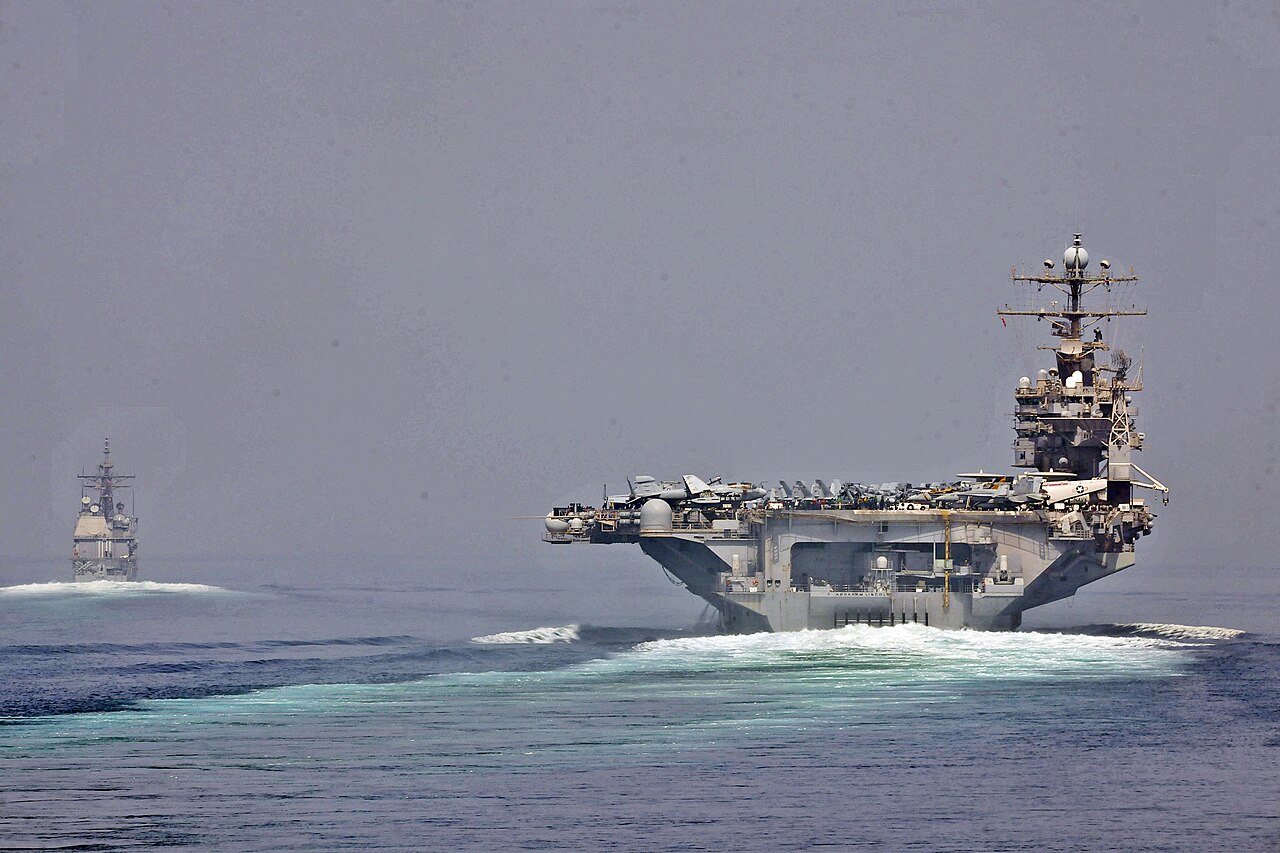
On Sunday, April 19, the guided-missile destroyer USS Spruance intercepted the Iranian cargo vessel Touska in the Gulf of Oman, firing on its engine room before seizing it. The ship was attempting to reach Iranian waters despite the naval blockade imposed by Washington. It was the first time the United States had physically attacked and confiscated a merchant vessel since establishing the blockade, during which 25 commercial ships had already been turned back.
Tehran immediately demanded the return of the Touska, calling the act “state piracy,” and vowed a “decisive response.” Iran Air separately announced that domestic flights would resume Tuesday, April 21, after a 50-day suspension caused by the war — an ambiguous signal: a return to some semblance of normalcy, but in a country still under bombardment.
The Ceasefire on a Knife’s Edge
The two-week ceasefire, which came into effect on April 7 after 38 days of American-Israeli strikes, expires this Wednesday, April 23, at midnight Washington time. Trump was categorical: “It is very unlikely I would extend it if no deal is reached.” Oil markets reacted nervously, with prices jumping on news of the Touska seizure and the diplomatic standstill.
The situation is further complicated by the fact that Vice President JD Vance and a U.S. delegation are preparing to return to Islamabad, but Tehran has still not confirmed it will send a delegation. Foreign Minister Abbas Araghchi summed up Iran’s position bluntly: “We have no new decision on new talks.”
The Islamabad Knots
The first round of negotiations, held on April 11 and 12 in Islamabad under Pakistani mediation, lasted more than 20 hours — including both direct and indirect exchanges between Vance and the Iranian delegation. Araghchi had declared the two sides “inches from an understanding,” but condemned “American maximalism and shifting goalposts.”
The main sticking points remain:
- Uranium enrichment: Washington proposes a 20-year suspension; Tehran counter-proposed 5 years, which the U.S. rejected.
- Sanctions relief: Iran demands a binding timeline; the U.S. wants to condition each phase.
- Strait of Hormuz: Iran has re-closed this vital passage in retaliation for the U.S. blockade of Iranian ports — 20% of the world’s oil transits through this chokepoint.
- Frozen assets: Tens of billions of dollars in Iranian assets remain blocked abroad.
Iran has made clear it will not negotiate “under the shadow of threats,” while Trump maintains the blockade as leverage.
Domestic Repression: The Execution Machine Runs On
While diplomacy falters behind the scenes, the regime’s repressive machinery is running at full capacity inside the country. According to HRANA (Human Rights Activists News Agency), at least 10 political prisoners have been executed since the war began, with the pace of executions entering “a new and deeply alarming phase.”
Among them: Amirhossein Hatami, 18 years old, arrested during the January protests, executed on April 2. Three days later, Mohammadamin Biglari and Shahin Vahedparast — arrested in the same case — met the same fate. Amnesty International has additionally reported that seven other prisoners linked to the protest movement face imminent execution.
This context is part of a deeper trend: at least 1,639 people were executed in Iran in 2025, a 68% increase over 2024 and the highest figure recorded since 1989. Observers note that the regime is using executions as a tool of political deterrence, seeking to crush any internal dissent at a moment when its legitimacy is being severely tested by the war.
The Human Cost Since February 28
Iran’s forensics chief has stated that nearly 3,400 people have been killed in the country since the start of American-Israeli strikes on February 28, 2026. This official figure is likely an undercount according to human rights NGOs. The anti-regime protests that erupted in December 2025 — fueled by the depreciation of the rial, runaway inflation, and shortages — had already left hundreds dead even before the armed conflict began.
Key Takeaways
The next decisive window is within 48 hours. If no agreement in principle is reached before Wednesday evening, Trump has strongly implied that strikes would resume. Iran, for its part, warns that it has “new cards on the battlefield” — a deliberately opaque phrase that could refer to long-range missiles, proxy operations across the region, or a complete closure of the Strait of Hormuz.
Pakistani mediation remains the only diplomatic architecture in place. Islamabad has a strong strategic and economic interest in preventing a resumption of hostilities in its oil-rich backyard, but its leverage is limited in the face of intransigence on both sides. The world holds its breath.
Sources
- Al Jazeera — Iran war live: Tehran shuns talks, Trump says blockade stays (April 21, 2026)
- NBC News — Iran vows retaliation after ship seizure
- CNN — Live updates: Iran war, peace talks in Pakistan (April 21, 2026)
- NPR — US seizes Iranian cargo ship in Strait of Hormuz
- Al Jazeera — Cloud over US-Iran talks: key sticking points
- ABC News — Iran escalates crackdown on dissent (April 20, 2026)
- Amnesty International — Seven protesters at risk of imminent execution (March 2026)
- CBS News — Trump not under pressure over Iran war deal