This article was generated by artificial intelligence and reviewed by Le Pivot's editorial team. We believe in transparency.
Full US Blockade, Tehran Counter-Threatens: The Diplomatic Countdown Begins
By Le Pivot — Iran Monitor · April 15, 2026 · 10 min read
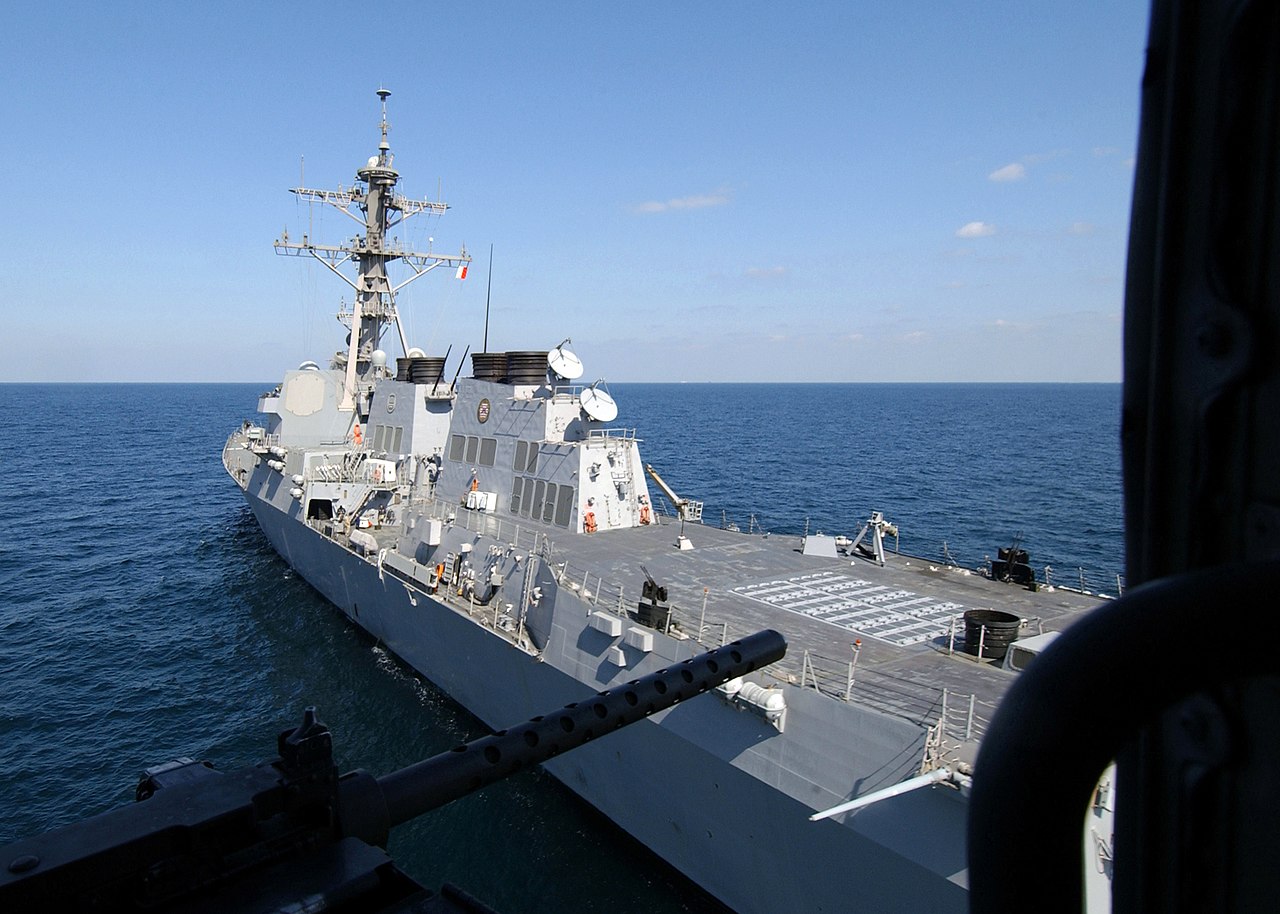
Day 7 of the US naval blockade of Iranian ports. US Central Command confirmed Wednesday that the operation is “fully implemented”: ten ships have been turned away since Monday, none have broken through the naval cordon. The destroyer USS Spruance forced an Iranian cargo vessel to reverse course after it attempted to hug the coastline to evade the blockade. Meanwhile, Islamabad is shuttling between capitals, Trump says he sees the war as “almost over,” and markets are buying the optimistic scenario — for now.
Total Blockade: Iran’s Maritime Trade at a Standstill
US Central Command declared that its naval forces have “completely halted economic trade going into and out of Iran by sea.” Approximately 90% of Iran’s economy depends on maritime commerce, making the blockade an unprecedented economic stranglehold.
Since the operation began Monday, ten ships have been intercepted and turned back. The most noted case: an Iranian cargo ship attempting to skirt the naval cordon along the coastline, forced to turn around by the USS Spruance. No armed confrontations have been reported, but tensions remain extremely elevated.
Iran’s National Petrochemical Company (NPC) also announced the suspension of petrochemical product exports “until further notice,” prioritizing domestic supply disrupted by US-Israeli strikes between February 28 and April 8.
Tehran’s Counter-Threat: The Red Sea in the Crosshairs
Facing the blockade, Iran’s armed forces raised the stakes: Tehran threatened to obstruct maritime traffic in the Persian Gulf, the Sea of Oman, and the Red Sea if the US maintains pressure on Iranian ports and “creates insecurity for Iranian commercial ships and oil tankers.”
Iran’s Foreign Ministry spokesperson reiterated that “Iran cannot be besieged,” calling the blockade illegal under international maritime law.
This rhetorical escalation comes as the Strait of Hormuz remains under partial US naval control following the collapse of the April 8 ceasefire. Extending retaliation to the Red Sea would directly affect global traffic toward the Suez Canal and would represent an act of considerable gravity.
Pakistan as Mediator: A Second Chance?
Pakistan’s army chief traveled to Tehran on Wednesday for talks with senior Iranian officials. The objective: to prepare a second round of negotiations between Washington and Tehran, following the failure of the Islamabad talks on April 12.
The White House said it was “optimistic” about the chances of a deal and confirmed that Islamabad would likely be the venue for a potential second round of discussions. According to Pakistani sources quoted by Al Jazeera, both sides signaled willingness to resume dialogue, though no date has yet been set.
The main sticking points remain the same as in Islamabad: Iran’s nuclear program, Tehran’s demand to unfreeze sanctioned assets, and the question of maritime transit through the Strait of Hormuz.
Trump Plays the Optimism Card, Markets Follow
Donald Trump declared Tuesday evening that the war with Iran was “very close to over” and that Iranian authorities “really want to make a deal.” He added on Truth Social that if a deal was struck, the stock market was going to “boom.”
The message was well received on Wall Street: the S&P 500 and Nasdaq closed Wednesday at historic records, lifted by optimism surrounding a possible durable ceasefire with Iran. Investors appear to be pricing in de-escalation, despite the persistent contradictory signals on the ground.
In Congress, the US Senate rejected a Democrat-led resolution that would have required congressional authorization before any additional military action against Iran. It was the fourth such vote to fail since the conflict began.
Civil Society: Death Sentences and Prison Resistance
Behind the noise of diplomatic negotiations, domestic repression continues. HRANA (Human Rights Activists News Agency) reported on April 14 that an Iranian court sentenced four additional protesters to death, including a woman, for “cooperating with the United States” and “membership in hostile groups” against the Islamic Republic.
Wednesday also marked the 116th consecutive week of the “No to Executions Tuesdays” campaign: hunger strikes were reported in at least 56 prisons across the country, despite a seven-week internet blackout that makes tracking these events from inside the country extremely difficult.
According to figures published by NGOs and reported by Euronews, Iran executed at least 1,639 people in 2025 — a 68% increase over the previous year and one of the highest rates in the country’s recent history.
Regional Context: Lebanon, Hezbollah, and European Markets
Parallel to the Iranian crisis, Israel continued military operations in Lebanon. Strikes killed four Lebanese paramedics and wounded six others during an emergency mission near Nabatieh in the country’s south. Since March 2, Lebanese health authorities have recorded at least 2,167 deaths and more than 7,000 injuries from Israeli strikes.
In Europe, markets opened slightly higher Thursday, lifted by optimism around Iran. France revised its 2026 growth forecast downward to 0.9%, with the Finance Ministry preparing a crisis scenario involving oil at up to $150 per barrel if the Red Sea situation were to deteriorate.
Key Takeaways
April 16 confirms that the dynamic is a race between economic pressure and diplomatic de-escalation. Washington has shown it can lock Iran down by sea — Tehran has shown it can threaten to lock down the rest of the world in return. Pakistan is trying to get both parties into a room before either one acts.
The coming days will be decisive: if a date is set for a second round of negotiations, markets will continue their ascent. If Tehran follows through on its Red Sea threat, the $150-per-barrel scenario becomes reality, and oil-importing economies — Europe first — will pay the price.
Sources
- Al Jazeera — Iran war live, April 16, 2026
- NBC News — US blockade of Iran, live updates
- CNN — White House optimistic about Iran deal
- CNBC — Trump: war ‘very close to over’, markets at record highs
- Euronews — Iran executed at least 1,639 people in 2025
- Radio-Canada — War with Iran ‘almost over,’ says Trump
- Boursorama — Tehran threatens Red Sea lockdown
- Iran News Update — Silent Gallows: executions under cover of war