This article was generated by artificial intelligence and reviewed by Le Pivot's editorial team. We believe in transparency.
Hormuz Blockade: Race Against the Clock Before Ceasefire Expires
By Le Pivot — Iran Monitor · April 14, 2026 · 10 min read
On April 15, 2026, the US-Iran conflict enters a critical new phase. The American naval blockade of the Strait of Hormuz, launched on April 13 following the collapse of the Islamabad talks, is now 48 hours old. Meanwhile, Washington and Tehran are engaged in behind-the-scenes diplomacy to restart negotiations before their bilateral ceasefire expires on April 21. Inside Iran, judicial repression is escalating at an unprecedented pace.
The Hormuz Blockade: Maximum Pressure Tool
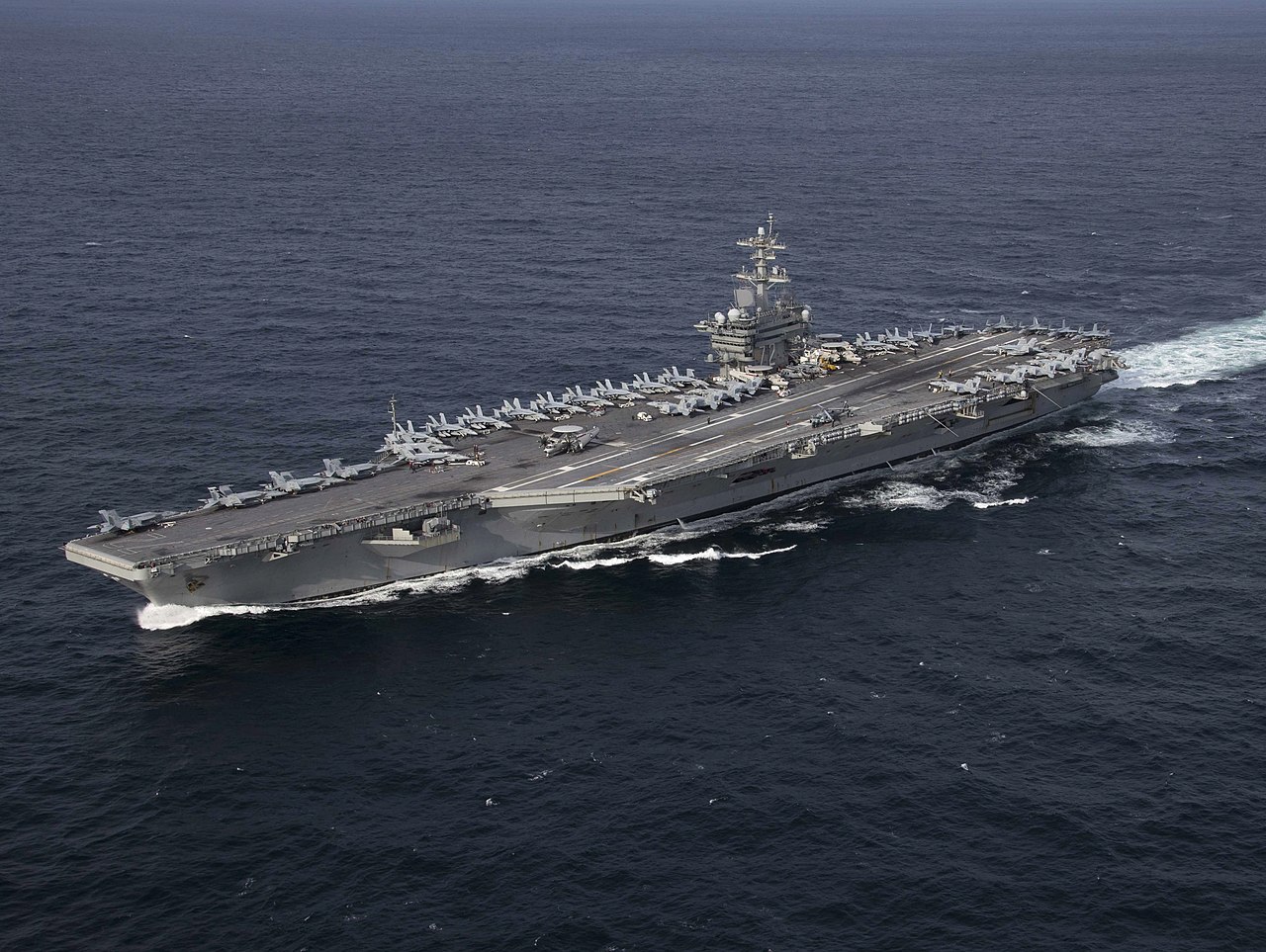
US Central Command (CENTCOM) confirmed the naval blockade became operational on Monday, April 13 at 10 a.m. ET. More than 10,000 Marines, sailors, and airmen are deployed in the operation, backed by over a dozen US warships and dozens of aircraft. According to the Pentagon, no ship managed to enter Iranian port waters on the first day of enforcement.
The operation specifically targets traffic entering and leaving Iranian ports — chiefly Bandar Abbas, Bandar Imam Khomeini, and Chabahar — while theoretically leaving other commercial shipping lanes through the strait open. A distinction China vigorously contested, calling the blockade “dangerous” and warning it risks destabilizing global energy markets.
The economic impact on Iran is immediate. Before the blockade took effect, Tehran was exporting approximately 1.84 million barrels of oil per day, generating nearly $5 billion in March 2026 — a 40% increase from February. This revenue allowed the regime to finance the war and partially cushion domestic economic pressures. The US blockade cuts off this financial lifeline.
Iran has a temporary buffer: floating reserves estimated at 157.7 million barrels as of April. Iranian authorities and their Chinese partners have floated the transcontinental rail corridor through Central Asia as an alternative, but no concrete evidence of crude oil transport through this route has yet been documented.
The Diplomatic Race Against the Clock
The failure of the Islamabad talks on April 11–12 did not close the door on negotiation. US Vice President JD Vance, who led the American delegation during what were the first direct negotiations since 2015, acknowledged that 21 hours of talks were insufficient to bridge fundamental differences.
The key sticking points:
- Uranium enrichment: Washington demands a 20-year freeze on all enrichment activity and the extraction from Iran of its stockpile of highly enriched material, notably the roughly 400 kilograms of uranium enriched to 60% — near weapons-grade level. Tehran countered with a 3-to-5-year suspension, which Trump has rejected as insufficient.
- Strait of Hormuz: Full reopening to commercial shipping remains a non-negotiable American precondition for any lasting agreement.
- Lebanon: Iran refuses to allow the ceasefire to apply to Lebanon, where the Israeli invasion continues.
Despite these gaps, President Trump told the New York Post that updates could come “in the next two days,” saying he had been contacted by “the right people” willing to “work a deal.” The White House is acutely aware of domestic political pressure: inflation and gas prices are surging ahead of November elections.
Mediators — including Qatar and Oman, traditional intermediaries in US-Iran affairs — are working to enable a second round of in-person talks before the ceasefire expires on April 21. An extension of the truce remains on the table as well.
Domestic Repression: The Judicial Machine in Wartime Mode
Under the cover of a state of emergency, Iran’s judicial apparatus is accelerating executions of political prisoners at an alarming rate. According to the National Council of Resistance of Iran (NCRI), six imprisoned PMOI/MEK members were executed between March 30 and April 4:
- Vahid Bani Amerian
- Mohammad Taghavi
- Babak Alipour
- Pouya Ghabadi
- Akbar Daneshvarkar
- Abolhassan Montazer (66 years old)
On April 2, Amir Hossein Hatami, 18, was executed after being arrested during the January uprising. On April 5, Vahid Baniamerian (33) and Abolhassan Montazer were also executed on charges of links to the MEK.
Four more prisoners from the January 2026 uprising have been sentenced to death: Mohammadreza Majidi Asl (34), his wife Bita Hemmati, Behrouz Zamaninezhad, and Kourosh Zamaninezhad — all arrested in Tehran and subjected to torture during interrogations.
The NCRI documents what it describes as a strategy of “physical elimination of political opponents”: rushed executions, flagrant violations of fair trial rights, and refusal to return bodies to families.
Civil Society: Resistance Behind Bars
On April 14, prisoners across Iran marked the 116th consecutive week of the “No to Executions Tuesdays” campaign. Hunger strikes were organized in at least 56 prisons nationwide, in the context of a severe internet blackout imposed for seven weeks.
Internationally, solidarity is organizing. On April 11, thousands of Iranians in the diaspora gathered in Paris and Stockholm to denounce the wave of executions and call for urgent international intervention. In Berlin, demonstrators gathered for the 45th consecutive day outside the Iranian embassy.
The IRGC Intelligence Organization also announced the arrest of 123 people in the provinces of Hamedan, Semnan, and Gilan, accused of links to anti-government networks, Israel, and foreign-based media outlets.
Geopolitical Context: China as Reluctant Arbiter
China’s reaction to the US blockade illustrates the growing geopolitical tensions around the conflict. China is Iran’s largest oil importer and depends on the Strait of Hormuz for a significant share of its energy supply. Its condemnation of the blockade as “dangerous” signals that economic pressure on Iran directly reverberates onto Chinese interests.
This dynamic paradoxically gives Beijing a potential mediating role in forthcoming negotiations — leverage Washington cannot ignore.
Key Takeaways
The diplomatic window is narrowing. The ceasefire expires in six days (April 21) and the naval blockade increases pressure on both sides: Iran loses oil revenues, while the United States faces international tensions and rising energy prices. A resumption of negotiations before April 21 appears necessary to prevent fresh military escalation — but gaps on nuclear enrichment remain substantial. The outcome will depend largely on Tehran’s willingness to make significant concessions on its nuclear program, and Washington’s ability to accept something less than total capitulation.
Sources
- NBC News — U.S. and Iran could hold new peace talks as soon as this week
- CNBC — More U.S.-Iran peace deal talks are in discussion, White House says
- Al Jazeera — No ships ‘make it past US blockade’ in Hormuz strait in first day: Pentagon
- Al Jazeera — How much will US Hormuz blockade hurt Iran, and does Tehran have an escape?
- Axios — Mediators rush to revive U.S.-Iran nuclear talks before ceasefire expires
- Time — Officials Considering Second Round of U.S.-Iran Talks As Sticking Points Remain
- NPR — Trump vows to sink Iranian ships approaching a U.S. blockade of Strait of Hormuz
- NCRI — Iran News in Brief – April 15, 2026