This article was generated by artificial intelligence and reviewed by Le Pivot's editorial team. We believe in transparency.
Islamabad Without a Deal: Vance Heads Home Empty-Handed, Strait Remains a War Zone
By Le Pivot — Iran Monitor · April 11, 2026 · 10 min read
The first direct negotiations between Washington and Tehran since Iran’s 1979 Islamic Revolution ended Sunday morning without an agreement. U.S. Vice President J.D. Vance departed Islamabad just after 7 a.m. local time, leaving behind a negotiating table still laden with fundamental disagreements. The two-week truce announced April 8 is holding — but barely.
Historic Talks, Bitter Conclusion
More than 21 hours of negotiations at Islamabad’s Serena Hotel were not enough. The American delegation, led by Vance and including special envoy Steve Witkoff and Trump son-in-law Jared Kushner, faced an Iranian delegation of roughly 70 officials, headed by Parliament Speaker Mohammad Bagher Qalibaf and Foreign Minister Abbas Araghchi.
“Iran has chosen not to accept our terms,” Vance told reporters before boarding his plane home. “I think that’s bad news for Iran much more than it’s bad news for the United States of America.”
These talks were the highest-level in-person negotiations between the two countries since 1979 — a historic diplomatic moment born out of a war that has, since the American-Israeli strikes of February 28, killed at least 1,701 Iranian civilians, including 254 children, according to the Human Rights Activists News Agency (HRANA).
The Strait of Hormuz: The Nerve of the War
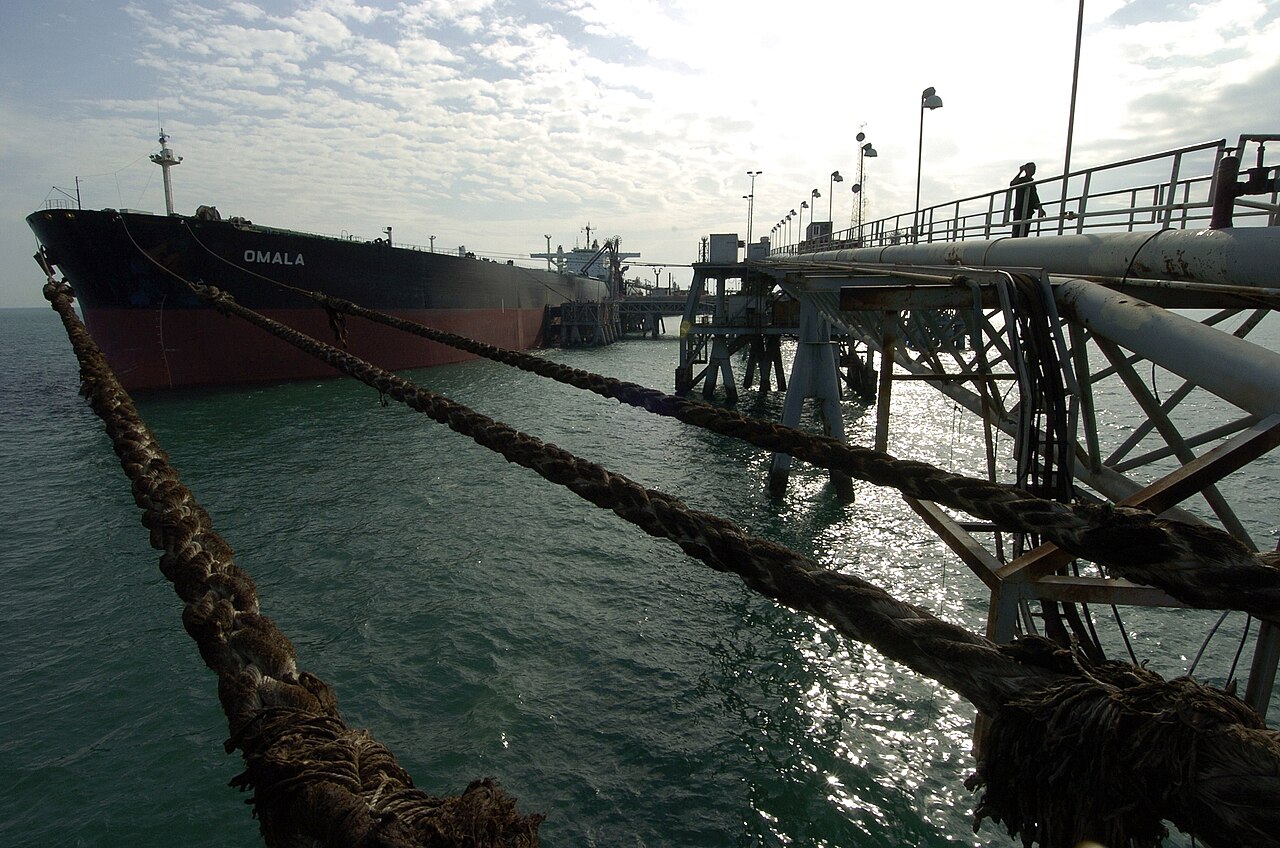
The main sticking point is as much geographic as strategic: the Strait of Hormuz. Since the start of the conflict, Iran has effectively blocked this maritime corridor through which roughly 20 percent of global oil and LNG transits. Washington demands its immediate reopening; Tehran insists it will only agree after a comprehensive peace deal is signed.
On April 11, destroyers USS Frank E. Petersen Jr. (DDG-121) and USS Michael Murphy (DDG-112) transited the strait — the first American warships to do so since the conflict began. CENTCOM announced the start of “mine-clearing” operations to establish “a new passage” for safe commercial transit. Iran immediately denied the ships had actually entered controlled waters, claiming they turned back after being warned of an attack.
Iran’s National Security Commission chart published April 9 shows a minefield covering 1,394 km² of the strait, including the standard traffic separation scheme. Iran has established a “tollbooth” near Larak Island, requiring documentation and, in some cases, payment for vessels to pass.
First Tankers Out — a Trickle, Not a Resumption
Despite the tensions, three laden supertankers transited the strait toward their destinations:
- Serifos (Liberian flag, chartered by Thailand’s PTT) — carrying Saudi and UAE crude, expected at Malacca on April 21
- Cospearl Lake and He Rong Hai (Chinese flags, chartered by Unipec/Sinopec) — carrying Iraqi crude bound for China
Three empty tankers were also spotted entering the Gulf to load crude. But according to Lloyd’s List Intelligence, transits remain below 10 percent of the normal daily flow. Between 500 and 700 vessels over 10,000 dwt remain stuck in the Persian Gulf.
The Nuclear Question, Still Unresolved
At the core of negotiations, the nuclear issue pits two irreconcilable visions against each other. Washington delivered a 15-point plan to Iranian officials through Pakistani intermediaries, calling for significant restrictions on Iran’s nuclear and military capabilities.
Tehran responded with a 10-point counter-proposal: lifting of all primary and secondary sanctions, the right to enrich uranium for peaceful purposes, Iranian control of the Strait of Hormuz, and release of frozen Iranian assets.
“We need to see an affirmative commitment that they will not seek a nuclear weapon, and they will not seek the tools that would enable them to quickly achieve a nuclear weapon,” Vance said. “That is the core goal of the president of the United States.”
Discussions also touched on Iran’s enriched uranium stockpiles — according to the New York Times, another major backstage point of contention.
Diaspora Protests, War on Hold
While diplomats negotiated in Islamabad, solidarity demonstrations took place in several cities on April 11: Amsterdam (Museumplein), Stockholm, Ottawa and Toronto (outside U.S. consulates), and Lisbon (outside the U.S. embassy).
On the Lebanese front, Israel killed more than 350 people on April 9 — a third of them women and children according to Lebanon’s health ministry, which counts over 2,020 dead and 6,400 injured since the conflict began. Prime Minister Netanyahu declared “the battle is not yet over,” defending the war amid growing domestic criticism and claiming Israel had “crushed” Iran’s nuclear program — an assertion that U.S. intelligence assessments have questioned.
Thirteen American service members have been killed in the conflict. Israel has recorded at least 20 deaths. Attacks attributed to Iran have killed at least 32 people in Gulf states.
Key Takeaways
Diplomacy is not dead — but it is exhausted. Both sides indicated that negotiations could resume, without specifying when. The two-week truce, expiring around April 22, remains the only safety net. The partial reopening of the strait — a few tankers here, two destroyers there — looks more like a test of strength than a genuine resumption of maritime traffic.
For global oil markets, the situation remains unstable: the Strait of Hormuz is militarized, mined, and governed by unilateral Iranian rules that neither international maritime law nor Washington recognizes. Until a substantive deal is signed, every tanker that passes is a diplomatic gamble.
Sources
- What To Know About the First Day of Peace Talks Between the U.S. and Iran — Time Magazine, April 11, 2026
- Oil tankers exit Strait of Hormuz amid fragile US-Iran ceasefire — Al Jazeera, April 12, 2026
- Two U.S. Warships Sail Through Strait of Hormuz to Establish New Route for Merchant Ships — USNI News, April 11, 2026
- US and Iran end ceasefire talks and Vance heads home without an agreement — AP via CityNews, April 12, 2026
- Control of the Strait of Hormuz and Iran’s Uranium Stockpiles Were Sticking Points — New York Times, April 11, 2026
- No deal reached after talks with Iran, Vance says — The Jerusalem Post, April 12, 2026
- Iran Update Special Report, April 11, 2026 — Institute for the Study of War, April 11, 2026
- Iran Monitor — Protests — IranMonitor.org, accessed April 12, 2026