This article was generated by artificial intelligence and reviewed by Le Pivot's editorial team. We believe in transparency.
Islamabad, Day One: Vance Faces Araghchi to Save the Ceasefire
By Le Pivot — Iran Monitor · April 10, 2026 · 10 min read
Forty-two days after the start of US-Israeli airstrikes on Iran, the two sides meet this Saturday in Islamabad for what constitutes the first direct high-level encounter since the conflict began. Vice President J.D. Vance leads the American delegation; on the Iranian side, parliamentary speaker Mohammad Bagher Ghalibaf and Foreign Minister Abbas Araghchi made the trip. All of this under the supervision of Pakistani Prime Minister Shehbaz Sharif, who orchestrated the two-week ceasefire signed at the end of March — and who is now attempting to transform it into lasting peace.
The immediate context is tense. The ceasefire is barely holding: deep disagreements over the Strait of Hormuz and the situation in Lebanon threaten to derail the talks before they have even begun.
Pakistan at the Center of the World
Rarely do capitals suddenly gain the status of a global diplomatic stage. Islamabad joins that rare club this weekend. In the space of three weeks, Pakistan went from quiet go-between to central mediator, bringing Egypt, Turkey, Saudi Arabia, and China together to support its efforts. The real breakthrough came when Prime Minister Sharif and army chief Asim Munir obtained simultaneous trust from both sides — a rarity that researcher Rasheed Wali Janjua of the Islamabad Policy Research Institute calls “a very rare concurrence.”
For Pakistan, the stakes go beyond prestige. A diplomatic success would be a considerable asset in a country grappling with chronic political and economic instability. But the equation is delicate: Islamabad does not recognize Israel diplomatically, and the talks formally exclude Tel Aviv from the table.
The Strait of Hormuz: Geopolitical Powder Keg
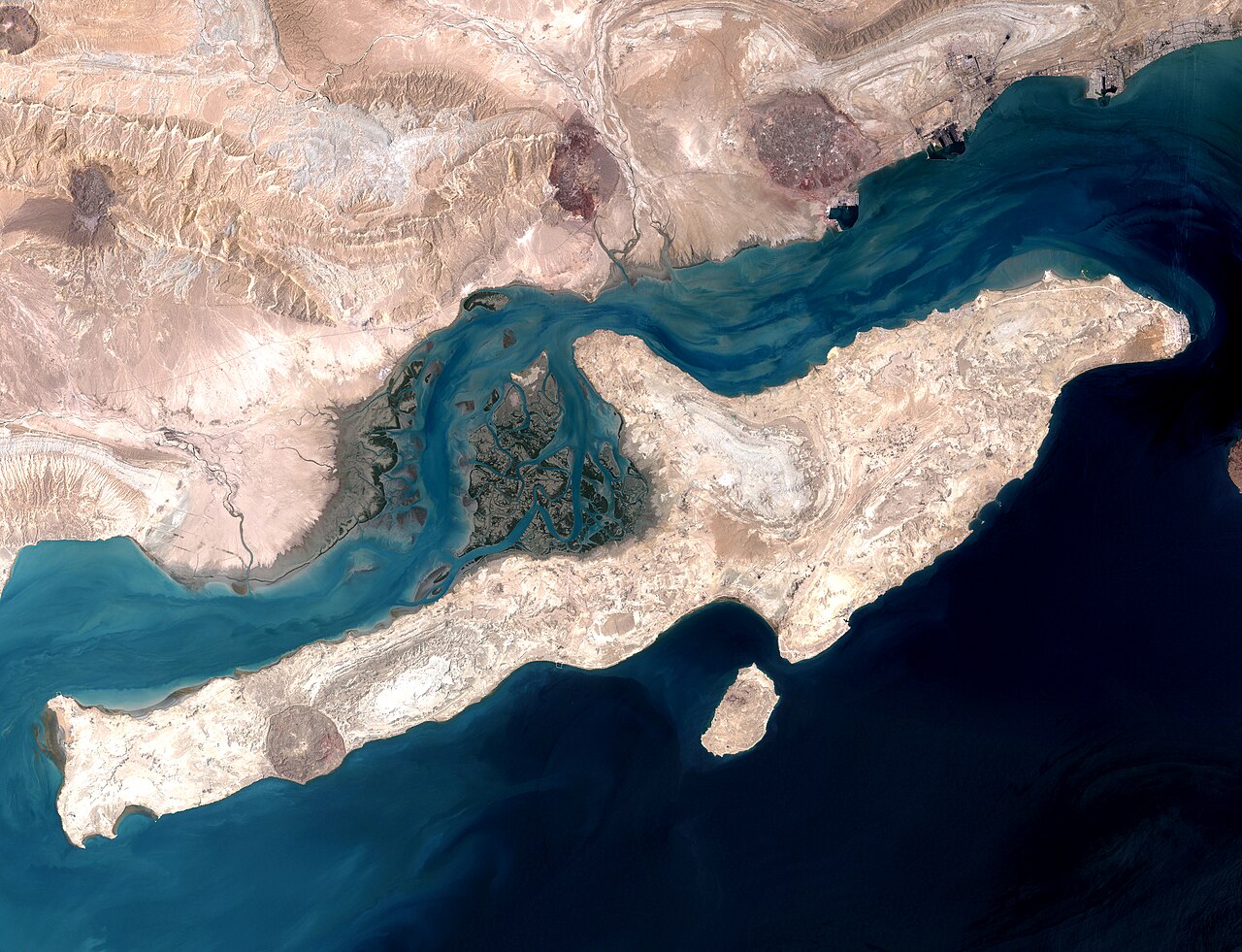
The first burning issue is the Strait of Hormuz. Since the start of the conflict, Iran has de facto controlled the most strategically important maritime passage on the planet — approximately 20% of the world’s oil supply normally transits through it. Despite the ceasefire, traffic remains at a “trickle,” according to Al Jazeera. Tehran has also indicated it intends to charge passage fees — in cryptocurrency according to the Financial Times — even in the event of a final agreement.
Trump responded Friday evening, from the steps of Air Force One: “We’re going to open up the Gulf. Fairly soon. With or without their help.” The American president ruled out any form of Iranian toll — “We’re not going to let that happen” — and linked the strait’s reopening to a nuclear deal: “No nuclear weapons, that’s 99% of it. The strait will open automatically.”
The Council on Foreign Relations noted this week that any formula granting Iran even partial control of the strait would set a dangerous precedent — a red line for Gulf allies and for Washington.
Lebanon: The Second Sticking Point
The second obstacle is Lebanon. Israel continues to strike Lebanese territory despite Iranian declarations that Lebanon is covered by the ceasefire. Lebanese Prime Minister Nawaf Salam addressed Islamabad directly on Thursday to request Pakistan’s help.
Sources close to the Iranian negotiation team reported Friday that Tehran was conditioning the dispatch of its delegation to Islamabad on a halt to strikes on Lebanon — then ultimately reversed course, with its negotiators landing in Islamabad Saturday morning. The Middle East Monitor nonetheless cited an Iranian source stating that “no Iranian team will travel to Pakistan or engage in talks with the US until attacks on Lebanon have stopped” — a contradiction that neither government has clarified.
Netanyahu, for his part, authorized direct talks between Israel and Lebanon in Washington — a gesture that could partially unblock this file and facilitate a broader agreement.
Human and Military Toll: 42 Days of War
Figures published this week give a sense of the conflict’s scale: 650 Iranian missiles fired, 24 people killed in Iran, 18,000 bombs dropped by the IDF according to data compiled by Israeli media. Former Iranian Foreign Minister Kamal Kharazi died Friday from wounds sustained in the initial strikes, according to Iranian state media — a significant regime figure who had survived the initial attack.
Markets reacted nervously to the announcement of talks. Stocks rebounded on optimism, but the uncertainty surrounding the ceasefire continues to weigh on oil prices. Seoul opened lower, reflecting tensions in Asian supply chains.
Civil Society and Dissenting Voices
On the margins of the diplomatic drama, exiled Iranian artists were spotlighted this week by several Western media outlets. Iranian cartoonists publishing from abroad are producing work about millions of Iranians silenced — a reminder that behind the talks between states, a civil society is trying to survive the dual pressure of the regime and the war.
The question of Iranian public opinion on the conflict is complex. An article in Israel National News claimed that Iranians were supporting their government’s defeat — a source to be taken with caution, but one that illustrates the fracture between the regime and part of its population.
Key Takeaways
The Islamabad talks are a beginning, not a solution. Three questions will structure the coming days:
- Nuclear weapons — Trump has made this his absolute priority, a sine qua non for any agreement. Tehran has not clearly stated what it is willing to offer.
- Hormuz — Reopening the strait is the global economic emergency. Any Iranian attempt to maintain control or impose passage fees will be a casus belli for the United States.
- Lebanon — The missing interlocutor is Israel. As long as Netanyahu continues strikes, Iran will refuse to consider the ceasefire as effective.
China is watching. According to several analyses published this week, Beijing holds part of the key in the Pakistani mediation — as an economic partner of Iran and an actor with a stake in the stability of Gulf maritime routes. If the Islamabad talks fail, the next diplomatic step could well be Chinese.
Sources
- Pakistan hosts U.S.-Iran peace talks after weeks of frantic diplomacy — NPR, April 11, 2026
- Trump says Strait of Hormuz to reopen ‘soon’ as US, Iran head to talks — Al Jazeera, April 11, 2026
- US, Iran set for high-stakes talks in Pakistan — DW, April 11, 2026
- Iran war ceasefire teeters over disagreements on Lebanon and the Strait of Hormuz — PBS NewsHour, April 10, 2026
- As a Strait of Hormuz Standoff Grows, Will Trump’s Fragile Iran Ceasefire Hold? — Council on Foreign Relations, April 10, 2026
- Iran demands crypto fees for ships passing Hormuz during ceasefire — Financial Times, April 9, 2026
- U.S., Iran prepare for peace talks with a gulf separating the two sides — Washington Post, April 10, 2026
- Iran Monitor — real-time dashboard, accessed April 11, 2026