This article was generated by artificial intelligence and reviewed by Le Pivot's editorial team. We believe in transparency.
Islamabad on Edge: The Fate of the Iran-US Ceasefire Hangs on This Weekend's Talks
By Le Pivot — Iran Monitor · April 9, 2026 · 11 min read
Forty-one days into the conflict, Iran and the United States are set to meet face-to-face for the first time in Islamabad on Saturday, April 11. The stakes are historic: a contested 14-day ceasefire is holding by a thread, drone attacks continue across the Gulf, Israel is bombing Lebanon, and new Supreme Leader Mojtaba Khamenei is claiming victory while setting conditions Washington deems unacceptable.
The Lebanese Equation: The Talks’ Central Knot
The main obstacle to the Islamabad talks is not nuclear — it is Lebanon.
Tehran insists the signed ceasefire covers all fronts, including Israeli strikes against Hezbollah. Iran, Pakistan (the mediator), and Hezbollah share this interpretation. Washington and Jerusalem maintain the opposite: Lebanon is not part of the deal.
This divergence is not semantic. On Wednesday, April 8 — mere hours after the ceasefire took effect — Israel launched its deadliest wave of strikes on Lebanon since the war began, killing at least 303 people and wounding more than 1,000, according to Lebanon’s Health Ministry. In response, Hezbollah broke its own pause and resumed attacks: 26 barrages on northern Israel in 24 hours, including rocket strikes on Kiryat Shmona and drone attacks on Nahariya.
Iran’s Deputy Foreign Minister Khatibi-zadeh revealed that Iran was “only minutes away” from launching missiles at Israel during the night of April 9-10 — before Pakistan intervened to defuse the crisis. The red line is public: if Israeli strikes in Lebanon continue, Iran will not send its delegation to Islamabad.
Iran’s Parliament Speaker Mohammad Bagher Ghalibaf, reportedly set to lead the Iranian delegation, was categorical: “Lebanon is an inseparable part of the ceasefire. Time is running out.” Iranian officials publicly denied in the morning that negotiators were on their way to Pakistan — a negotiating posture designed to maintain pressure.
Islamabad: Who Will Be at the Table?
The American delegation is heavy with political symbolism. It will be led by Vice President JD Vance, accompanied by Special Envoy Steve Witkoff and Jared Kushner, President Trump’s son-in-law. Kushner’s presence — one of the architects of the Abraham Accords — signals the administration’s intent to treat this at the highest diplomatic level.
CENTCOM Commander General Brad Cooper will also be present, underscoring the military dimension of the discussions.
Pakistan’s capital declared two consecutive public holidays to secure the delegations. The streets of Islamabad have been emptied. The atmosphere recalls historic summit diplomacy.
Trump, in a statement to NBC News, said he remains “very optimistic” about the possibility of a peace deal. His administration has presented a 15-point proposal — not fully disclosed — reportedly including Iran’s commitment to no nuclear weapons, the handover of its highly enriched uranium, limits on its defense capabilities, and the reopening of the Strait of Hormuz.
The Iranian Proposal: A Minefield
Iranian state media published a 10-point version of Tehran’s demands — and it immediately provoked backlash in Washington. It included: guarantees against future strikes, Iranian control over the Strait of Hormuz, recognition of Iran’s right to uranium enrichment, the lifting of all US sanctions, war reparations, and a ceasefire across all fronts including Lebanon.
The White House immediately clarified that Trump was referring to a “different, more reasonable proposal.” Mediators told the Wall Street Journal that Iran had softened several demands — notably on nuclear enrichment, the withdrawal of US forces from the region, and war reparations. But Supreme Leader Mojtaba Khamenei’s Arbaeen statement hardened the atmosphere: he demanded war reparations, a “new phase” in Hormuz management, and proclaimed Iran the “definitive victor” of what he called the “Third Imposed War.”
Iran’s nuclear chief separately described enrichment limits as “mere wishes that will go to the grave.”
The Strait of Hormuz as a Permanent Economic Lever
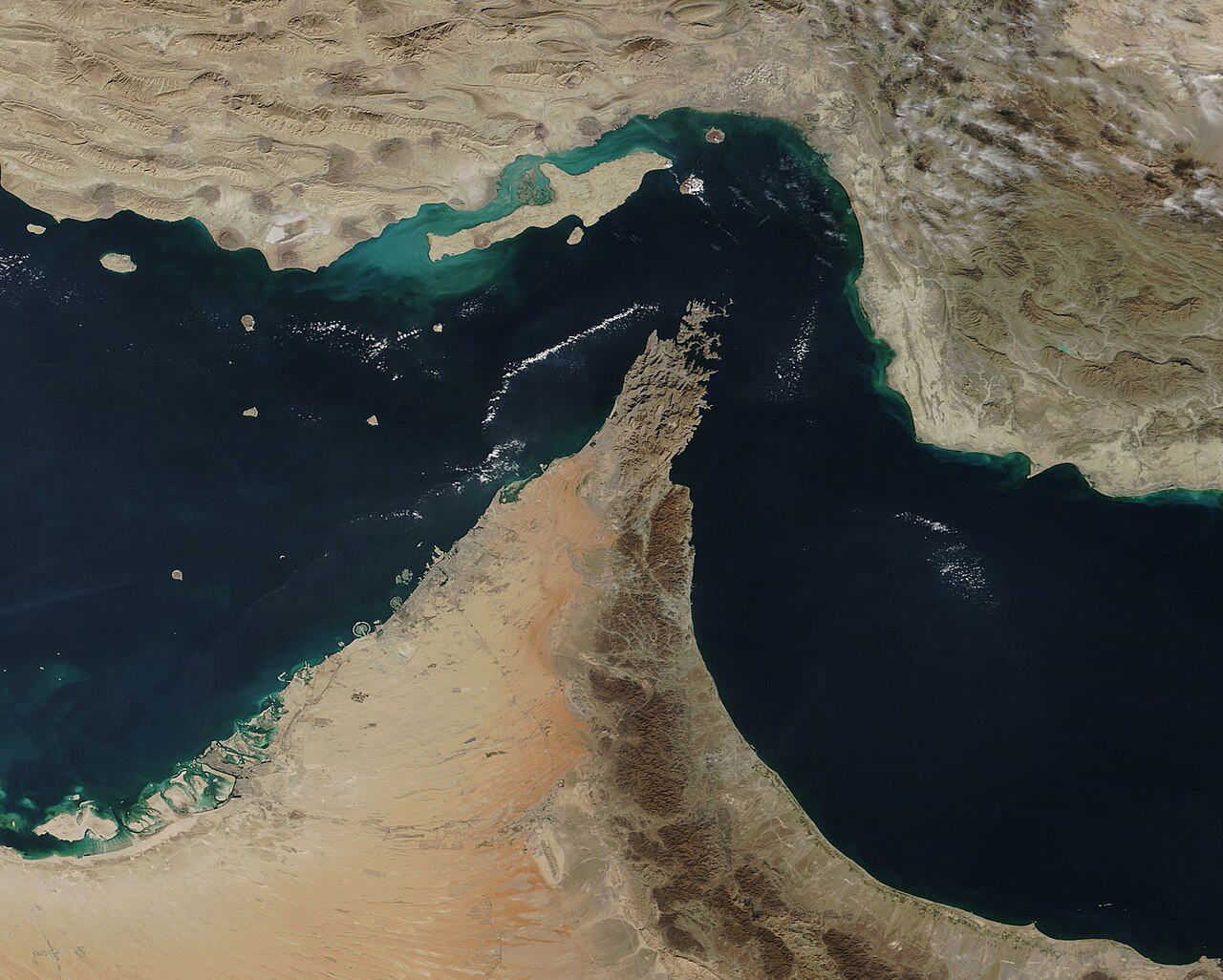
While diplomats prepare to negotiate, Iran is maintaining maximum economic pressure on global markets via the Strait of Hormuz. According to an Iranian source cited by Russian media, Tehran will not allow more than 15 vessels per day to transit during the ceasefire. Iran’s Ports and Maritime Organization published instructions requiring ships to follow designated routes coordinated with the IRGC Navy.
These routes funnel international maritime traffic into Iranian-controlled waters. Mines are reportedly present outside these corridors — US officials had mentioned at least a dozen Iranian mines in the strait in March. Oil is trading above $100 per barrel.
The Institute for the Study of War (ISW) analyzes the Iranian strategy clearly: keeping oil prices high to exert economic pressure on Washington and extract concessions during negotiations.
Drones and Regional Escalation: The Gulf Under Strain
The night of April 9-10 was marked by several incidents revealing the ceasefire’s fragility. Drones targeted Kuwaiti critical infrastructure, including a Kuwait National Guard site. Bahrain intercepted seven Iranian drones since April 8. An explosion was reported in Dubai. Drone swarm signals were detected over Tehran, Tabriz, and Karaj.
The US also summoned the Iraqi ambassador after a drone strike on an American diplomatic facility in Baghdad. Pro-Iranian Iraqi militias — including Kataib Sayyid al-Shuhada and Harakat Hezbollah al-Nujaba — called for resuming attacks against Israeli-American targets in response to strikes in Lebanon. The Houthis warned that Israeli escalation in Lebanon “may lead to the return of the entire battle.”
Civil Society and Diaspora: Sustained Mobilization
Internationally, the Iranian diaspora is maintaining pressure. Five solidarity demonstrations are planned this Saturday, April 11: in Amsterdam (Museumplein), Lisbon (US Embassy), Ottawa (Mackenzie Street), Stockholm, and Toronto (US Consulate, 360 University Avenue). These gatherings deliberately coincide with the Islamabad negotiations.
Inside Iran, Supreme Leader Mojtaba Khamenei called on citizens to “remain in the streets to influence negotiations” — an injunction that reveals the domestic political importance the regime attaches to the ongoing diplomatic process.
The Military Toll: Iran Decimated but Not Neutralized
The US State Department published a military campaign assessment on April 8: more than 85% of Iran’s defense industrial base destroyed, including the majority of its ballistic missiles, launchers, and long-range attack aircraft. All Iranian submarines were sunk, 150 warships destroyed, 97% of naval mines eliminated. Strikes hit more than 13,000 targets, including 2,000 command and control sites and 1,500 air defense facilities.
On the nuclear front, Chairman of the Joint Chiefs General Dan Caine stated that 80% of Iran’s nuclear industrial base was struck. Satellite imagery confirms significant damage to the Parchin Military Complex, which housed a former nuclear weapons components production site from the Amad Project.
Despite these massive destructions, Iran is not neutralized. It still controls the Strait of Hormuz, maintains drone strike capability, and holds considerable diplomatic leverage at Islamabad.
Key Takeaways
The outcome of the Islamabad negotiations this weekend will determine whether the Middle East moves toward a negotiated peace or a resumption of conflict. Four critical variables will dominate the next 48 hours: whether Israeli strikes in Lebanon halt or continue; whether an Iranian delegation effectively arrives for talks; whether both sides can find common language on Hormuz and the nuclear question; and whether the Axis of Resistance coalition holds firm against pressure to escalate.
Trump wants a diplomatic victory. Khamenei wants recognition of Iranian sovereignty. The space between these two objectives is narrow — but for the first time in forty-one days, it exists.
Sources
- Iran Monitor — Dashboard, April 10, 2026
- CNN — What we know about the US-Iran talks in Islamabad (April 10, 2026)
- ISW/CTP — Iran Update Special Report, April 9, 2026
- Middle East Monitor — No Iranian team in Pakistan until Lebanon attacks stop (April 10, 2026)
- The Times — Iran war latest: Strait of Hormuz, Trump says (April 10, 2026)
- Haaretz — Issues set to dominate US-Iran talks in Islamabad (April 10, 2026)
- Reuters — US consumer inflation expected to surge amid Iran war (April 10, 2026)