This article was generated by artificial intelligence and reviewed by Le Pivot's editorial team. We believe in transparency.
Day 36 — Two US Warplanes Downed, Tehran Strikes Gulf Refineries
By Le Pivot — Iran Monitor · April 3, 2026 · 10 min read
On the thirty-sixth day of the conflict between the United States, Israel, and Iran, the war crosses a new threshold with the confirmed loss of two American fighter jets over Iranian territory and the Persian Gulf. Simultaneously, US-Israeli strikes continue to target Iran’s energy and nuclear infrastructure, while Tehran retaliates by hitting refineries in Gulf states.
Two US Warplanes Shot Down — A First in the Conflict
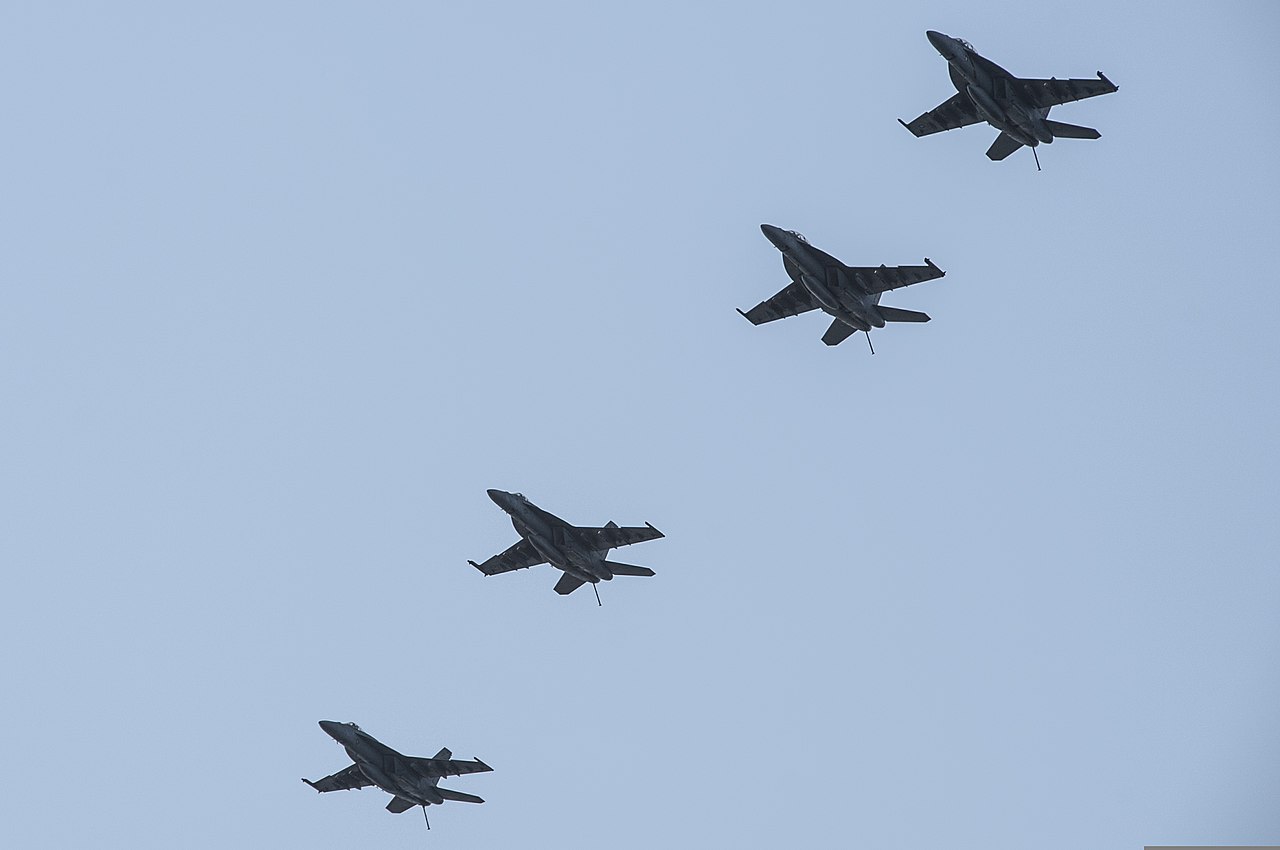
Iran announced Friday that it had downed two US military aircraft in separate incidents. The first was hit over Kohgiluyeh and Boyer-Ahmad province in southwestern Iran — marking the first time a US warplane has been shot down over Iranian soil since hostilities began. The second crashed into the waters of the Persian Gulf.
Two crew members were rescued by US forces, but at least one aviator remains missing. Search and rescue operations were underway Friday evening, according to Pentagon officials cited by Al Jazeera. This loss represents a psychological turning point in the conflict: it demonstrates that Iranian air defenses, despite five weeks of intensive bombing, retain significant strike capability.
Strikes on Petrochemical and Nuclear Sites
US-Israeli forces continued their systematic campaign to destroy Iranian infrastructure. Two petrochemical plants in Khuzestan province, in the south of the country, were struck Friday. The Bushehr nuclear site was targeted again, with a strike killing at least one person.
These attacks are part of the strategy to erode Iranian capabilities announced by President Trump, who declared Wednesday that the United States was “close to fulfilling” its objectives, while promising to strike “extremely hard” for another two to three weeks. Notably, Iranian operators have managed to restore some underground missile bunkers to operational status within hours of their destruction, according to the Times of Israel, illustrating the resilience of Iran’s military apparatus.
Iranian Retaliation on Gulf Refineries
In retaliation, Iran struck refineries in Gulf states, a major escalation that directly threatens global energy supply. The Revolutionary Guards reiterated that the Strait of Hormuz would remain closed to Iran’s “enemies,” maintaining pressure on oil prices. Brent crude surpassed $105 per barrel following Trump’s address, a level that weighs heavily on the global economy.
Domestic Repression and Human Rights
On the domestic front, repression is intensifying. The judiciary-affiliated Mizan news agency confirmed the execution of four political prisoners accused of belonging to the People’s Mojahedin Organization of Iran (MEK) and of “participating in armed operations.” Reports indicate internet shutdowns, deployment of heavily armed forces in public spaces, and the systematic labeling of protesters as “foreign agents.”
The arrest on April 1 of Nasrin Sotoudeh, the iconic human rights lawyer and Sakharov Prize laureate, has sparked a wave of international condemnation. No official information has been released regarding the charges, the responsible judicial authority, or her place of detention.
EU Extends Sanctions
The European Union announced the extension of its sanctions against Iran until April 2027, citing ongoing human rights violations. The measures include travel bans and asset freezes targeting 262 individuals and 53 entities, as well as a ban on exporting equipment that could be used for internal repression or telecommunications surveillance. At the UN Security Council, Russia and China continue to challenge the legality of sanctions reinstated through the “snapback” mechanism.
Key Takeaways
The loss of two US combat aircraft represents Washington’s most significant military setback since the start of the conflict, and could fuel domestic political debate over the cost of this war. Iran’s retaliation against Gulf refineries dangerously widens the theater of operations, threatening global energy stability. On the humanitarian front, with over 340 children killed and 1.2 million children displaced across the region, the international community faces a crisis that extends far beyond the military dimension.
- Iran war live: US-Israel attacks hit petrochemical, nuclear sites in Iran — Al Jazeera
- 2 U.S. planes are down and Iran hits Gulf refineries — NPR
- Iran war: What is happening on day 35 of US-Israeli attacks? — Al Jazeera
- EU extends Iran sanctions, citing human rights concerns — JURIST
- Iran reportedly recovering bombed missile bunkers within hours — Times of Israel
- Iran war live updates: U.S. rescues a crew member of downed fighter jet — MS Now
- L’Iran promet des attaques « dévastatrices » après les menaces de Trump — Boursorama