This article was generated by artificial intelligence and reviewed by Le Pivot's editorial team. We believe in transparency.
Day 26: Washington Deploys 82nd Airborne as Pakistan Relays Peace Plan to Tehran
By Le Pivot — Iran Monitor · March 24, 2026 · 10 min read
Day twenty-six of the war. As Donald Trump continues to claim negotiations are underway with Tehran, the Pentagon has ordered the deployment of 3,000 paratroopers from the 82nd Airborne Division to the Middle East — a signal that contradicts the diplomatic narrative. Meanwhile, Pakistan has positioned itself as a mediator by relaying American demands to Iran, while deadly strikes in southern Tehran killed at least 12 people. The global energy crisis deepens, with Brent crude surpassing $104 per barrel.
82nd Airborne Deployed: 6,000–8,000 US Troops at Iran’s Doorstep
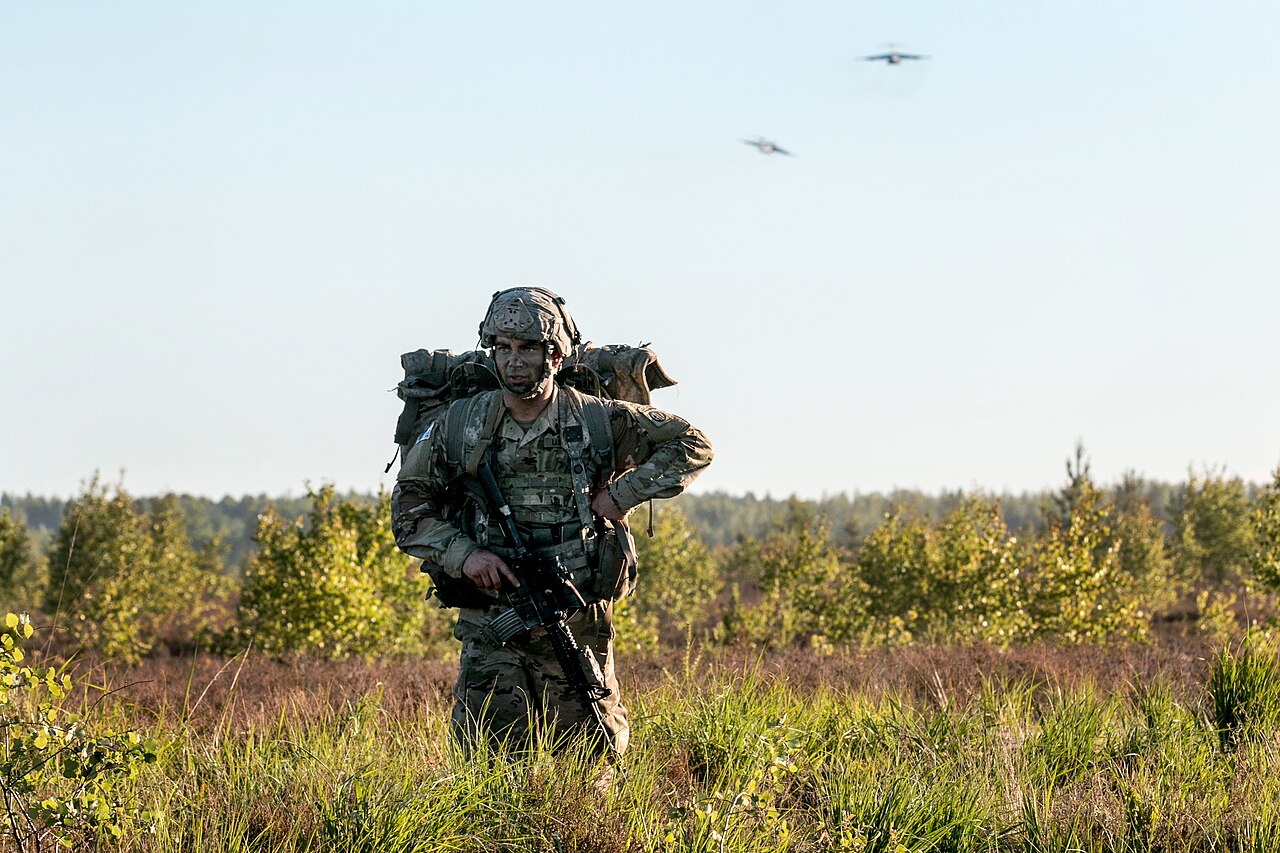
The Pentagon ordered the deployment of 2,000 to 3,000 paratroopers from the 82nd Airborne Division — the US Army’s rapid response unit, capable of mobilizing within 18 hours — to the Middle East on Tuesday (CBS News, NPR). This force joins two Marine Expeditionary Units already en route to the Persian Gulf, bringing total ground reinforcements to 6,000–8,000 troops.
This massive deployment comes at the very moment Trump claims Iran has offered a “very big present” and agreed never to seek nuclear weapons. The contradiction between military escalation on the ground and victory rhetoric in Washington feeds what analysts describe as “total confusion” over the administration’s true intentions.
Pakistan: An Unexpected Mediator
A major diplomatic development: Pakistan confirmed it has relayed US ceasefire demands to Tehran through its army chief. Islamabad also expressed readiness to host direct talks between the United States and Iran (Al Jazeera).
The American 15-point plan, whose details have not been made public, reportedly demands the dismantlement of Iran’s nuclear program, the lifting of the Strait of Hormuz blockade, and the disarmament of pro-Iranian militias across the region. Tehran has not yet officially responded, but Iranian military officials continue to reject any notion of negotiations, accusing Washington of buying time while deploying more troops.
Deadly Strikes on Tehran: 12 Killed in Southern Capital
Airstrikes hit southern Tehran on Tuesday, killing at least 12 people and wounding 28. In eastern Tehran, explosions destroyed a school and several residential buildings. The Iranian Red Crescent now estimates over 82,000 civilian structures have been damaged or destroyed since the conflict began (Al Jazeera).
The war has also taken a heavy toll across the region. In Lebanon, 1,072 people have been killed and 2,966 wounded since the March 2 escalation, with 33 deaths in the past 24 hours. In Iraq, 15 people died in a suspected US strike on a paramilitary base in Anbar province.
Persian Gulf: Saudi Arabia Under Drone Fire
Saudi oil infrastructure remains under constant pressure. Over the past eleven hours, Saudi Arabia intercepted more than 32 drones and a ballistic missile targeting the strategic facilities of Ras Tanura, Ghawar, and Abqaiq — the heart of global oil production (Al Jazeera). In Kuwait, a drone struck a fuel tank at the international airport, sparking a fire with no reported casualties.
Despite these attacks, a potentially positive signal came from Tehran: Iran declared that “non-hostile vessels” could transit through the Strait of Hormuz — a possible easing of the blockade that had been strangling global energy supplies for weeks.
Energy Crisis: Brent at $104, Countries Declare Emergencies
Brent crude surged 4.6% to settle near $104.50 per barrel on Tuesday. Enverus Intelligence Research raised its forecast by over 60%, projecting an average of $95 per barrel for the rest of 2026. Approximately 90% of crude oil destined for Asia normally passes through the Strait of Hormuz (Axios, Yahoo Finance).
The consequences extend far beyond the Middle East. Sri Lanka has cut energy consumption by 25% and switched off street lighting. The Philippines declared a national energy emergency. For Quebec, which imports a significant share of its oil, the price surge directly impacts gasoline and heating costs, reigniting the debate over accelerating the energy transition.
Key Takeaways
Day 26 crystallizes the contradictions of this conflict: Washington talks peace while sending thousands more paratroopers. Pakistan’s role as mediator represents a new diplomatic opening, but Tehran publicly refuses any negotiations. The potential easing of the Hormuz blockade could relieve oil markets, but strikes on Saudi infrastructure remind us that Iran retains its capacity to disrupt. Trump’s five-day deadline before striking Iranian power plants expires on March 28 — a date that could mark a decisive turning point.