This article was generated by artificial intelligence and reviewed by Le Pivot's editorial team. We believe in transparency.
Day 22: Natanz struck, Iran fires on Diego Garcia as oil tops $110
By Le Pivot — Iran Monitor · March 20, 2026 · 10 min read
Day twenty-two of the war. In the aftermath of Nowruz, fighting intensifies on all fronts. US-Israeli forces struck the Natanz uranium enrichment site — the crown jewel of Iran’s nuclear programme — while Tehran retaliated by launching ballistic missiles at the Diego Garcia military base in the Indian Ocean, a first at over 4,000 km range. Crude oil now exceeds $110 per barrel.
Natanz strike: the heart of the nuclear programme targeted
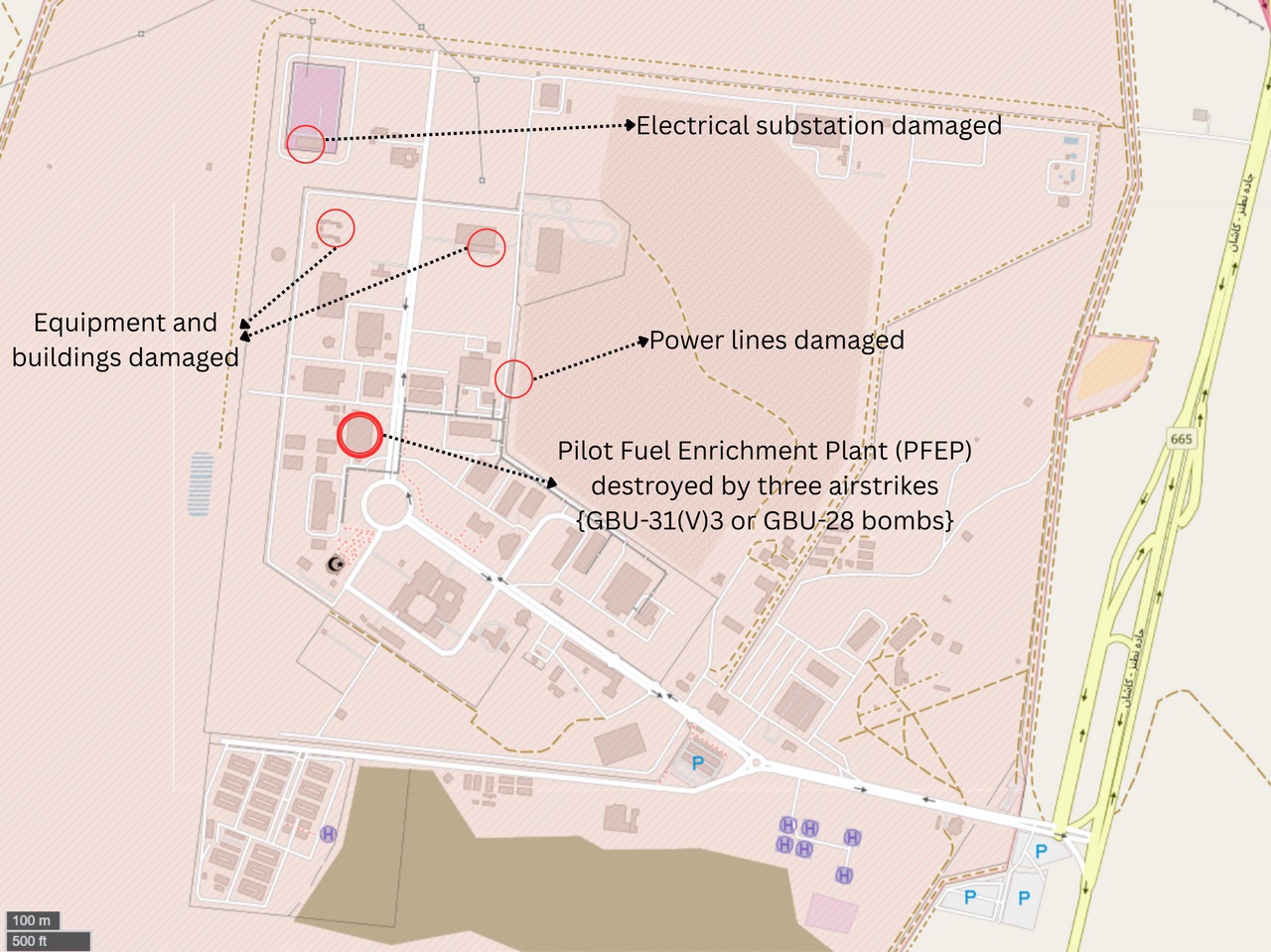
The Natanz uranium enrichment facility, considered the centrepiece of Iran’s nuclear programme, was hit by a joint US-Israeli strike overnight Friday into Saturday. The facility, largely buried underground, houses hundreds of centrifuges used for uranium enrichment.
Iranian state media claimed there was “no leakage of radioactive materials” or danger to nearby residents (Euronews). The strike follows Netanyahu’s declarations that Iran had lost its ability to enrich uranium — a claim the attack on Natanz appears designed to make permanent.
Trump also stated he was “weighing options” regarding Iran’s remaining nuclear stockpiles (CBS News), suggesting that other facilities could be targeted in the coming days.
Iran fires on Diego Garcia at 4,000 km range
In an unprecedented escalation, Iran launched two ballistic missiles at the joint US-UK military base on Diego Garcia in the Indian Ocean. This marks the first time Iran has attempted a strike at such distance — over 4,000 km — demonstrating a ballistic capability that Western analysts had underestimated.
The missiles reportedly did not reach their target (Times of Israel). Nevertheless, the attempt sends a major strategic signal: Iran is showing it can strike Western military installations well beyond the Middle Eastern theatre.
Energy crisis: crude tops $110
Crude oil prices have breached the $110 per barrel mark, representing roughly a 45% increase since the war began on February 28. The Strait of Hormuz, through which approximately one-fifth of the world’s oil transits, remains virtually closed to Western shipping.
Iran maintains its selective closure policy: only vessels from “aggressor countries” — the US, Israel, and their Western allies — are blocked, while tankers bound for China continue to pass. Since the conflict began, at least 11.7 million barrels of Iranian crude have transited the strait to China (CNBC).
Iranian drones again struck the Mina Al-Ahmadi refinery in Kuwait, sparking fires while crews were still working to contain damage from previous attacks (NBC News). Trump declared that “other nations have to protect Hormuz from Iran,” attempting to multilateralize the security burden in the Gulf.
In the United States, the average gasoline price has reached $3.91 per gallon, its highest level since October 2022.
Internet cut for 21 days
Iran enters its twenty-first day of digital blackout. Internet connectivity has dropped to 4% of normal levels since February 28, cutting off 93 million Iranians from all online access. This shutdown, the longest and most severe in the country’s history, prevents independent verification of the death toll and living conditions on the ground.
The Iranian Red Crescent reports over 18,000 civilians injured and 204 children killed since the war began. In total, more than 1,400 people have lost their lives in Iran. Human Rights Watch has condemned the blackout as a tool for concealing potential atrocities.
Diplomatic balance and persistent threats
General Shekarchi reiterated Iranian threats against “parks and tourist destinations” worldwide, while Bahrain announced it had intercepted and destroyed two more Iranian missiles, bringing its total to 143 missiles and 242 drones intercepted since February 28.
The UN Security Council debated Iran’s nuclear programme in a tense session, with Russia and China challenging the legality of “snapback” sanctions reimposed by the Europeans.
Key takeaways
The Natanz strike marks a potential turning point: if the site is effectively neutralized, the US-Israeli coalition will have achieved its stated objective — the destruction of Iran’s nuclear capabilities. But the attempted strike on Diego Garcia shows Iran retains power projection capabilities well beyond its region. The energy crisis deepens with oil at $110, and the internet blackout prevents the world from fully measuring the scale of the ongoing humanitarian catastrophe. For Quebec and Canada, soaring energy prices remain the most direct consequence of this conflict, with expected repercussions on gas prices and transportation costs.