This article was generated by artificial intelligence and reviewed by Le Pivot's editorial team. We believe in transparency.
Day 19: Israel strikes South Pars, Iran retaliates on Qatar
By Le Pivot — Iran Monitor · March 17, 2026 · 11 min read
Day nineteen of the conflict. The war has crossed an unprecedented threshold: Israel struck the South Pars gas field — the world’s largest natural gas reserve — provoking devastating Iranian retaliation against Qatar’s gas facilities. The energy escalation now threatens global LNG supply.
The South Pars strike: an energy turning point
The Israeli military targeted Iran’s South Pars complex, a field shared with Qatar in the Persian Gulf. The strike disabled a significant portion of Iranian gas production, immediately halting gas flows between Iran and Iraq.
South Pars holds approximately 8% of the world’s natural gas reserves. Its targeting marks a major escalation: for the first time, a premier strategic energy infrastructure has been directly hit in this conflict.
Retaliation on Ras Laffan: Qatar hit hard
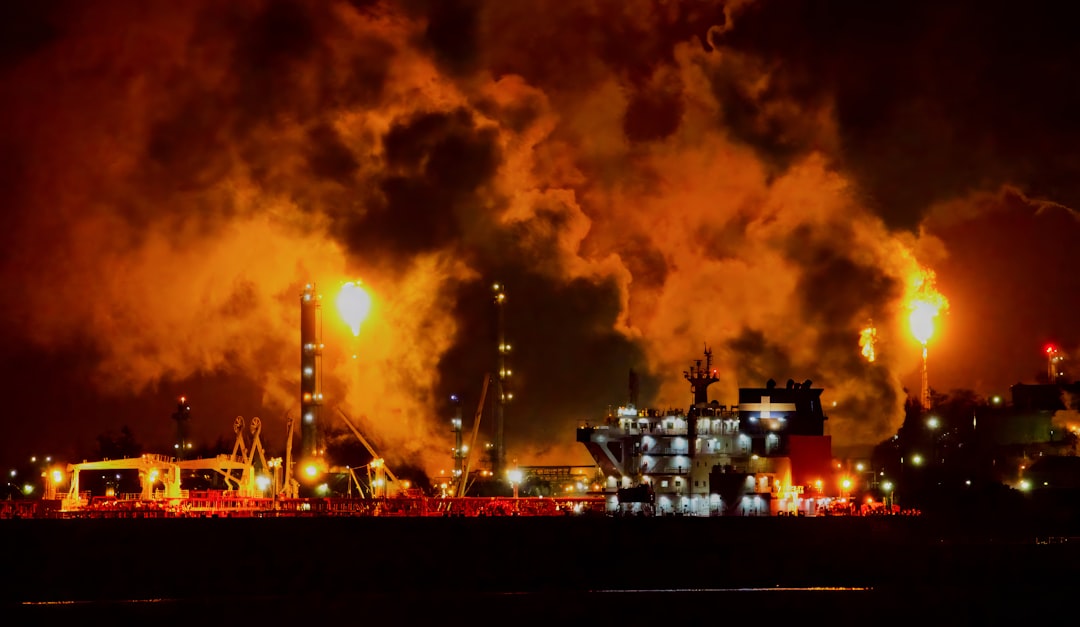
In retaliation, Iran launched missiles at Qatar’s Ras Laffan terminal, the world’s largest liquefied natural gas complex. Two of the country’s 14 LNG trains and one gas-to-liquids (GTL) facility were damaged.
The consequences are staggering:
- 17% of Qatar’s LNG capacity knocked offline
- 12.8 million tonnes per year of LNG unavailable for 3 to 5 years
- Estimated losses of $20 billion in annual revenue for Qatar
Qatar’s foreign ministry accused Israel of responsibility for this escalation, arguing that the South Pars strike triggered the chain of reprisals.
The definitive ceasefire rejection
Iranian Foreign Minister Abbas Araghchi reiterated Tehran’s categorical refusal to negotiate: “We are not seeking a ceasefire because we do not want this scenario to be repeated again after some time.” He insisted that “the United States started this war and is responsible for all its consequences,” demanding a permanent and total cessation of hostilities rather than a mere temporary truce.
Intelligence minister’s death confirmed
Iranian state television confirmed the death of Esmaeil Khatib, Minister of Intelligence, in an overnight Israeli airstrike on Tehran. Supreme Leader Mojtaba Khamenei declared that Israel would “pay the consequences” for the assassination of three senior officials: Khatib, Larijani, and Soleimani.
Energy markets in turmoil
Brent crude surged past $110 per barrel following the South Pars strike and the retaliation against Ras Laffan. The attack on Qatar’s gas infrastructure — the world’s largest LNG exporter — sent shockwaves through natural gas markets, with immediate repercussions on futures contracts in Europe and Asia.
For LNG-importing nations like Japan and South Korea, the loss of 17% of Qatari capacity represents a major logistical challenge heading into summer.
Key takeaways
Day 19 marks the conflict’s transformation into open energy warfare. By targeting South Pars, Israel crossed a red line that triggered Iranian retaliation against a third-party state — Qatar — previously relatively spared. The paralysis of Ras Laffan for 3 to 5 years will have lasting consequences on the global LNG market. For Quebec, which exports hydroelectricity and does not import LNG, this energy crisis could paradoxically strengthen the appeal of its resources, but global fossil fuel inflation will continue to weigh on transportation costs and the broader economy.